







































































































































































Low-Impact HIIT Workout for Beginners at Home: A No-Jump Routine
Author: RVLNSV PRASAD
Updated On: October 2026
About Us
Author Bio
Editorial Policy
Contact Us
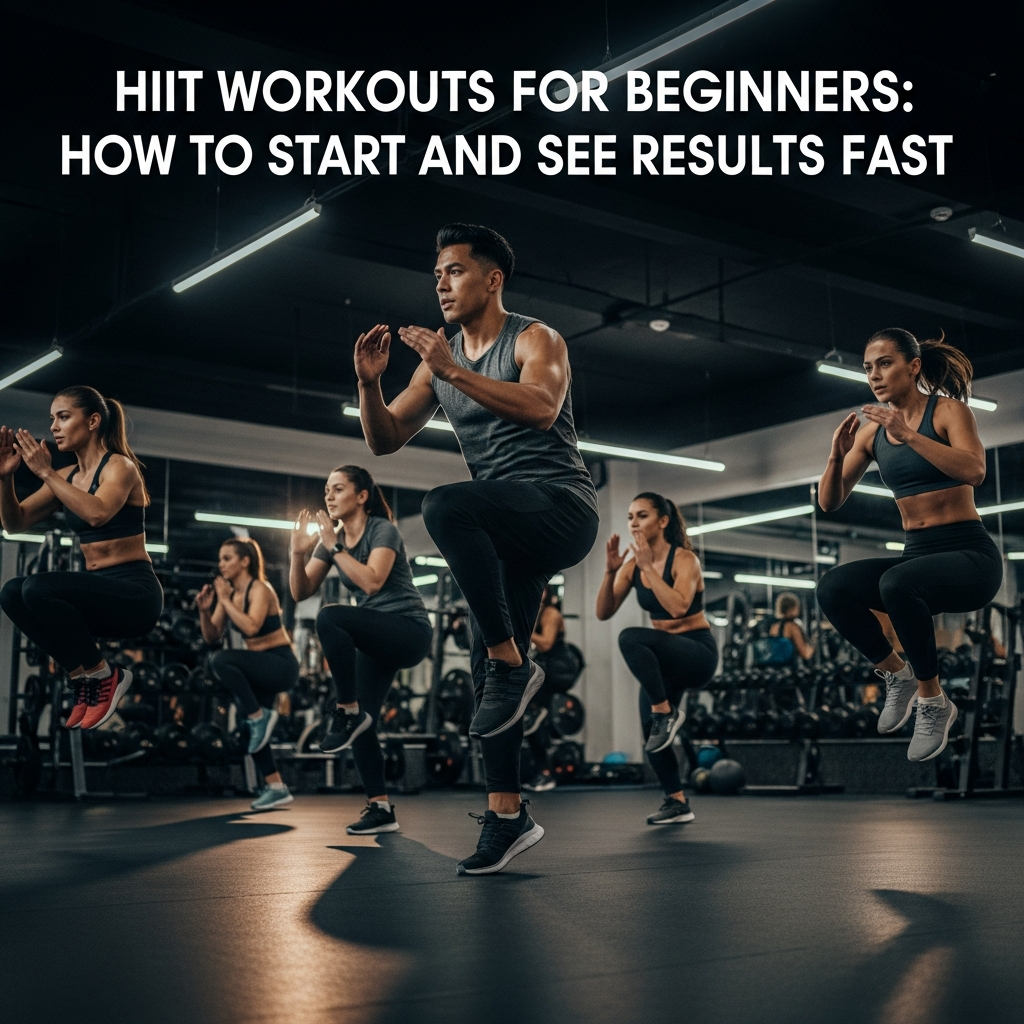
Introduction
Getting started with exercise can feel difficult when you have limited time, little equipment, or concerns about jumping and joint discomfort. A low-impact HIIT workout for beginners at home offers one way to build a simple routine without running, burpees, or repeated jumps.
High-intensity interval training (HIIT) alternates periods of harder activity with recovery. However, beginners do not need to start with maximum effort. You can begin with controlled standing movements, short work intervals, and longer recovery periods while learning how your body responds.
The goal is not to finish every workout exhausted. It is to find a manageable level of effort that you can repeat consistently, then progress as your fitness improves.
This guide explains how low-impact HIIT works, which exercises to try, how to structure a beginner session, and how to progress safely. It also covers common mistakes, recovery, weight management, and practical ways to adjust a workout on days when your energy is lower.
Quick Answer: What Is the Best Low-Impact HIIT Workout for Beginners at Home?
A good starting routine combines marching in place, side steps, standing knee lifts, chair sit-to-stands, and wall push-ups. Begin with a five-minute warm-up, perform each movement for 15–20 seconds, and recover for 40–45 seconds before the next interval.
Start with one round if you are new to exercise. You can gradually add a second round when the session feels manageable and you recover comfortably.
Remember that low impact describes how your feet and joints interact with the ground; it does not automatically mean low intensity. Increase effort gradually instead of trying to make every interval extremely difficult.
If you have been inactive for a long time, have a chronic health condition, or are unsure whether vigorous activity is suitable for you, consult a healthcare professional before beginning intense exercise. The CDC’s adult physical activity guidance provides additional advice on getting started safely.
Key Takeaways
- Low-impact HIIT uses controlled movements without requiring repeated jumps.
- Beginners can start with short work periods and generous recovery intervals.
- You do not need expensive equipment or a gym membership.
- HIIT can improve cardiorespiratory fitness, but faster weight loss is not guaranteed.
- A warm-up, controlled technique, and gradual progression matter more than speed.
- Walking, strength training, and recovery days can complement interval workouts.
- Stop exercising and seek appropriate medical help if you experience concerning symptoms.
What Is a Low-Impact HIIT Workout?
HIIT stands for high-intensity interval training. It involves alternating periods of higher-effort activity with recovery periods. During recovery, you may rest completely or continue moving slowly.
A low-impact version uses exercises that generally keep at least one foot on the floor. Examples include brisk marching, side steps, standing knee lifts, and controlled chair sit-to-stands.
Unlike a traditional high-impact circuit, this format does not require jumping jacks, jump squats, or burpees. That can make it easier to adapt to a small home workout space.
However, low-impact exercise is not automatically appropriate for every person with knee, hip, ankle, or back problems. The right movements depend on your symptoms, physical abilities, and medical history.
Low impact versus low intensity
These terms describe different things.
| Term | What it means | Example |
|---|---|---|
| Low impact | Less jumping and landing | Marching in place |
| Low intensity | The body is working relatively easily. | Comfortable walking |
| Moderate intensity | Breathing increases, but conversation remains possible. | Brisk walking |
| Vigorous intensity | Breathing becomes substantially harder. | Fast, demanding intervals |
You can march without jumping at a moderate or vigorous effort, depending on your pace and fitness level. If you are a beginner, start at an effort that feels controlled rather than chasing a particular heart rate or speed.
The NHS physical activity guidance explains the difference between moderate and vigorous activity and why very vigorous intervals should be approached thoughtfully.
What Does Research Say About HIIT?
HIIT is widely studied because it can improve cardiovascular fitness in relatively short sessions. Nevertheless, the evidence does not mean every HIIT routine is equally effective or suitable for everyone.
A 2024 umbrella review in Scandinavian Journal of Medicine & Science in Sports examined 24 systematic reviews covering 429 primary studies and 12,967 participants. It found that HIIT improved cardiorespiratory fitness compared with no exercise and, in many comparisons, traditional continuous training. The authors also noted that the quality of the included reviews varied. Read the published umbrella review.
Research specifically examining home-based HIIT has also produced encouraging findings. A systematic review and meta-analysis published in 2023 found improvements in cardiorespiratory fitness compared with no exercise, although it did not establish that home-based HIIT was clearly superior to conventional continuous training. Explore the full review on PubMed Central.
More recent evidence calls for realistic expectations. A Cochrane review updated through October 13, 2025, concluded that HIIT likely improves cardiorespiratory fitness in healthy sedentary adults. However, the evidence did not establish clear differences for several other outcomes, including some measures of blood pressure and blood fats.
What does this mean for beginners? HIIT can be a useful exercise option, but it is not a shortcut that guarantees rapid fat loss, improved blood sugar, or better results than every other form of exercise. Choose a routine that fits your current fitness and that you can maintain.
Benefits of Low-Impact HIIT for Beginners
1. It can improve cardiovascular fitness.
Regular aerobic activity trains the heart, lungs, and circulatory system to support physical effort. Over time, everyday tasks such as walking uphill or climbing stairs may feel more manageable.
HIIT provides one way to develop cardiovascular fitness, provided the effort and recovery periods are appropriate for your abilities. People who are completely inactive may benefit from starting with ordinary walking before progressing to harder intervals.
2. It can fit into a busy schedule.
Short workouts may be easier to schedule than long gym sessions. A brief circuit can help you establish an exercise habit when work, household responsibilities, or travel limit your available time.
Still, a 10-minute HIIT session does not automatically meet all weekly physical activity recommendations. The CDC recommends at least 150 minutes of moderate-intensity aerobic activity each week for adults, or 75 minutes of vigorous activity, alongside muscle-strengthening activity on at least two days.
You can build toward these targets gradually. Every bit of movement can be a useful starting point.
3. It provides an adjustable starting point.
A beginner can reduce the pace, shorten the work interval, increase rest, or use a chair for support. These adjustments allow the workout to match current ability instead of forcing everyone to follow the same pace.
For example, one person might march briskly for 20 seconds. Another might use a slower march for 10 seconds and rest for 50 seconds. Both can focus on controlled movement and gradually build capacity.
4. It can support weight management.
Physical activity uses energy and can help preserve physical function while a person works toward a healthier weight. HIIT may contribute to a weight-management plan, but results depend on several factors, including food intake, overall activity, sleep, medications, and individual health.
Avoid claims that a short workout automatically burns more fat than walking or produces a specific amount of weight loss. The CDC’s physical activity guidance explains why regular movement is valuable even when changes on the scale are gradual.
5. It may make exercise feel more manageable.
Some people prefer structured intervals because they know when each work period ends. That structure can reduce the uncertainty of beginning a new routine.
However, not everyone enjoys HIIT. If timed intervals feel stressful or leave you excessively tired, walking, cycling, swimming, or another suitable activity can be equally reasonable choices for building an active lifestyle.
Five Best Low-Impact HIIT Exercises for Beginners at Home
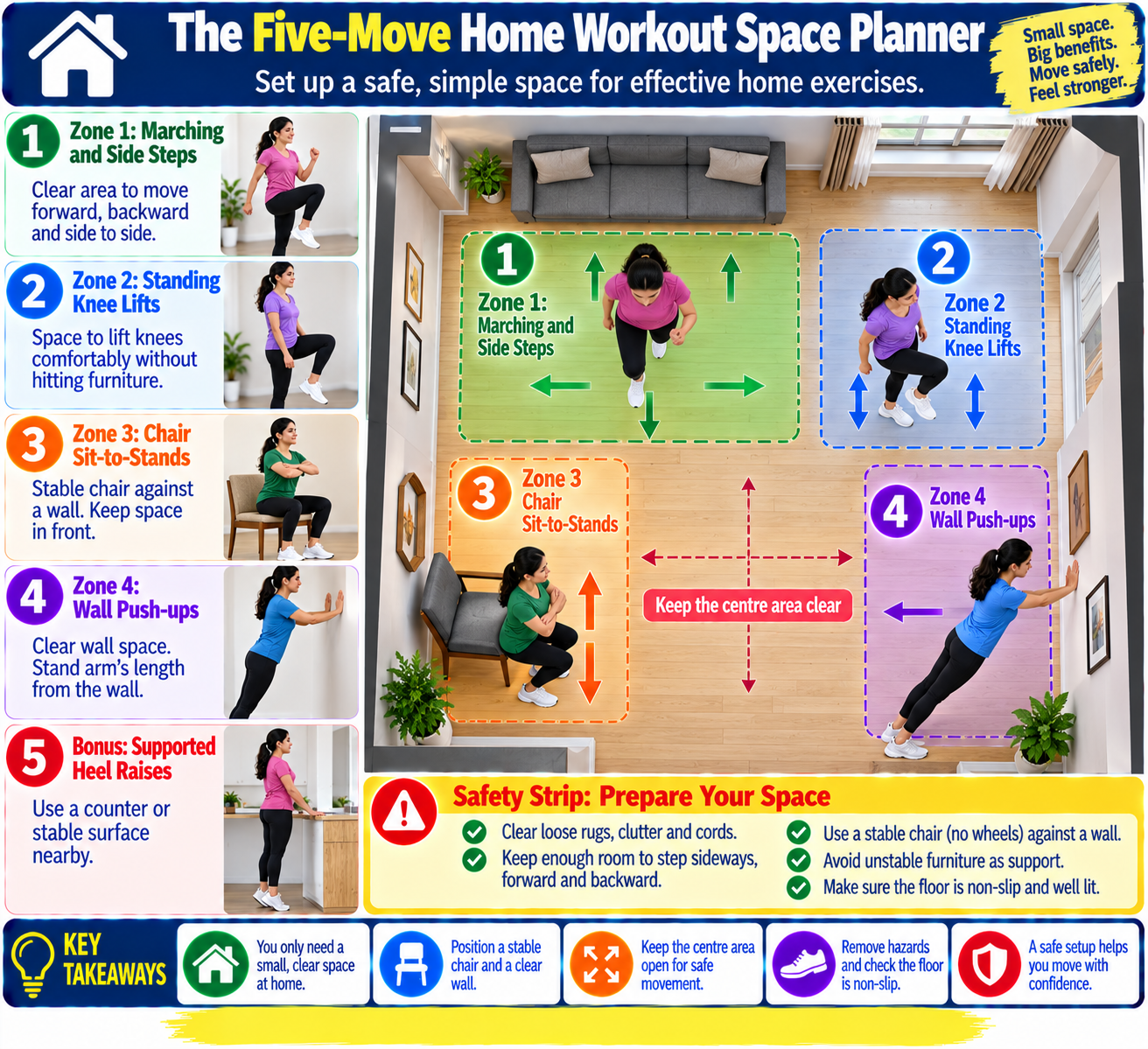
You can perform the following exercises in a clear area without purchasing special equipment. Wear comfortable footwear if needed, keep water nearby, and use a stable wall or chair for support when appropriate.
1. Marching in Place
Marching is a simple way to warm up or raise your effort without jumping.
How to do it:
- Stand upright with your feet about hip-width apart.
- Lift one foot and then the other in a steady rhythm.
- Swing your arms naturally if comfortable.
- Increase your pace slightly during the work interval while keeping control.
Keep the movement comfortable rather than lifting your knees as high as possible. If balance is a concern, march beside a stable support.
2. Side Steps
Side steps raise activity levels without requiring repeated landings.
How to do it:
- Stand with your feet comfortably apart.
- Step to the right and bring your other foot toward it.
- Repeat to the left.
- Continue at a steady pace, using your arms naturally.
Keep your knees slightly relaxed and avoid crossing your feet. Shorten the step if you have limited space or feel unsteady.
3. Standing Knee Lifts
Standing knee lifts combine rhythmic movement with balance and coordination.
How to do it:
- Stand tall with your hands near your sides.
- Lift one knee to a comfortable height.
- Lower it gently and alternate sides.
- Move a little faster only when your balance remains steady.
You do not need to bring your knee to hip height. If you feel unstable, hold on to secure support and move more slowly.
4. Chair Sit-to-Stands
Chair sit-to-stands build functional lower-body strength. They are not purely a cardio exercise, but they can add useful strength work to a beginner circuit.
How to do it:
- Place a stable chair against a wall.
- Sit with your feet flat on the floor.
- Lean forward slightly and stand using controlled movement.
- Lower yourself slowly until you sit again.
Use your hands for support if needed. Choose a chair height that allows you to move comfortably, and do not rush the standing or sitting phase.
5. Wall Push-Ups
Wall push-ups train the chest, shoulders, and arms with less demand than a floor push-up.
How to do it:
- Stand facing a wall.
- Place your hands on it at approximately chest height.
- Step back until your body forms a comfortable straight line.
- Bend your elbows to bring your chest toward the wall.
- Push away and return to the starting position.
Move your feet closer to the wall to make the exercise easier. Keep your body aligned instead of letting your hips sag.
Your Beginner Low-Impact HIIT Workout at Home
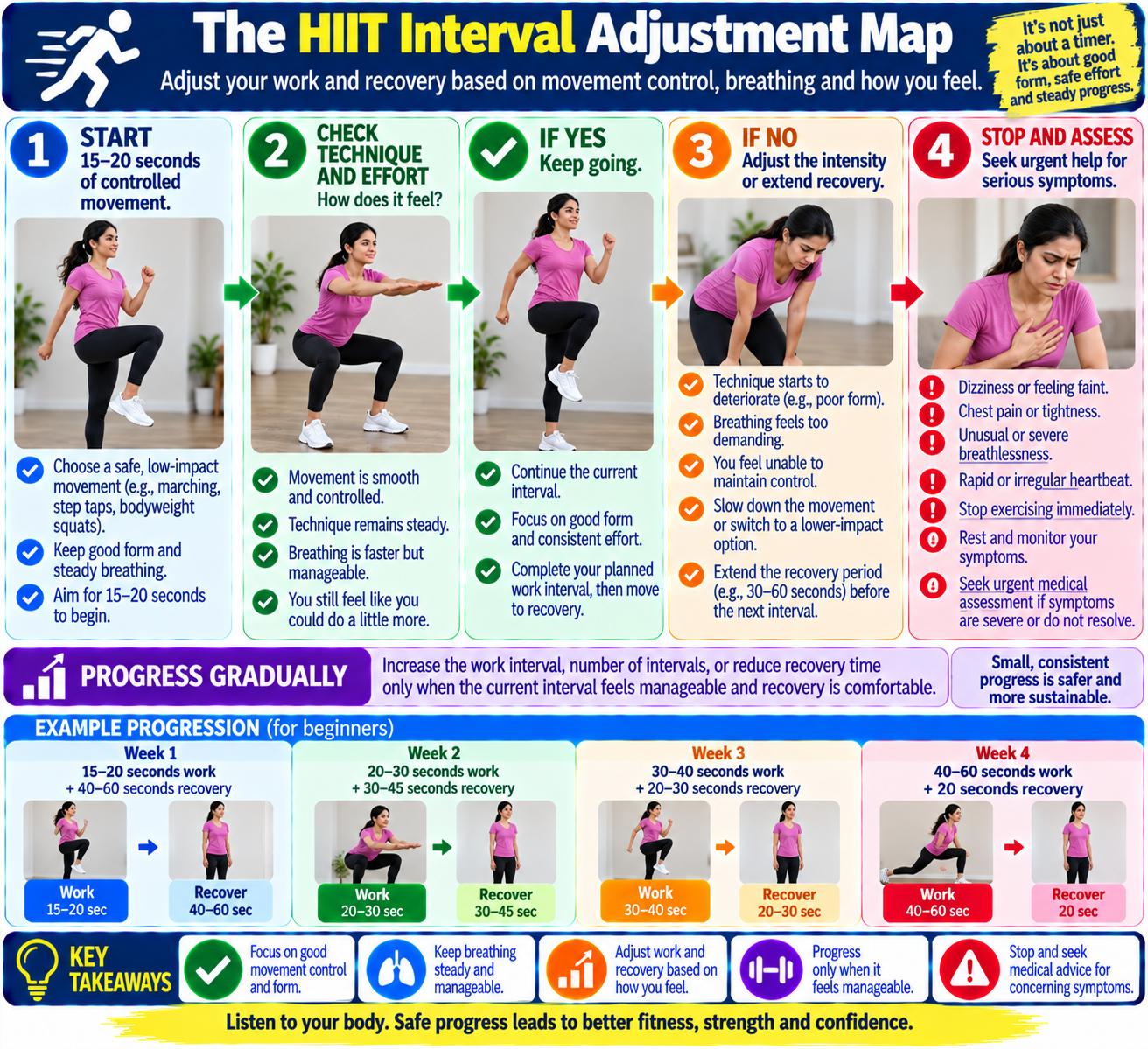
This routine is a practical starting template, not a validated medical exercise prescription. It deliberately uses short work intervals and longer recovery periods so that beginners can concentrate on technique.
The 15-minute no-jump workout
| Stage | Activity | Duration |
|---|---|---|
| Warm-up | Easy marching and shoulder circles | 5 minutes |
| Interval 1 | March in place | 20 seconds |
| Recovery 1 | Slow marching or rest | 40 seconds |
| Interval 2 | Side steps | 20 seconds |
| Recovery 2 | Slow marching or rest | 40 seconds |
| Interval 3 | Standing knee lifts | 20 seconds |
| Recovery 3 | Slow marching or rest | 40 seconds |
| Interval 4 | Chair sit-to-stands | 20 seconds |
| Recovery 4 | Rest | 40 seconds |
| Interval 5 | Wall push-ups | 20 seconds |
| Recovery 5 | Rest | 40 seconds |
| Repeat | Repeat the circuit if appropriate. | 5 minutes or less |
| Cooldown | Slow walking and comfortable mobility | 2–3 minutes |
Timing note: The exact duration depends on whether you complete one or two rounds and how long you warm up and cool down. One round of the five exercises and recoveries takes five minutes. If you are new to exercise, one round may be enough after the warm-up. Do not force the session to fit a 15-minute target if you need more recovery.
How hard should you work?
During the work interval, aim for a pace that feels more demanding than your recovery period while allowing you to maintain good technique. You should not need to sprint or reach your maximum effort.
Use the talk test as a rough guide. Moderate activity usually allows conversation, although singing may be difficult. Vigorous activity makes speaking more challenging. Learn more from the CDC’s explanation of activity intensity.
If you cannot maintain your technique, feel unusually breathless, or need much longer to recover, slow down or stop. Your first goal is a repeatable routine, not an exhausting workout.
How to Modify the Workout for Different Needs
A useful beginner plan includes alternatives instead of assuming every person can perform the same movement.
| If you experience… | Try this adjustment. | Keep in mind |
|---|---|---|
| Low confidence with balance | March beside a stable support | Avoid unstable furniture |
| Difficulty with knee bending | Use gentle marching or smaller side steps. | Do not push through joint pain |
| Low exercise tolerance | Work for 10–15 seconds and rest longer. | Progress only when comfortable |
| Limited space | March in place and use wall push-ups. | Clear the floor before starting |
| Discomfort during sit-to-stands | Use a higher stable chair or another comfortable movement. | Persistent pain needs assessment |
| Excessive fatigue | Stop the circuit and recover. | More intensity is not always better. |
Low-impact exercises can still cause discomfort if the movement is unsuitable or performed with poor technique. If pain persists, seek advice from a qualified healthcare professional or physiotherapist rather than repeatedly testing the painful movement.
A Four-Week Beginner Progression Plan
The aim of progression is to increase your capacity gradually. You do not have to make every workout longer, faster, and harder at the same time.
| Week | Suggested approach | Main goal |
|---|---|---|
| Week 1 | One short round, with generous recovery | Learn movements and observe how you feel. |
| Week 2 | Repeat one round or add a little activity if recovery is good. | Establish consistency. |
| Week 3 | Consider a second round on selected days | Build tolerance without rushing. |
| Week 4 | Maintain or slightly increase work time if comfortable. | Find a sustainable routine. |
This is an example rather than a fixed progression schedule. Some beginners may need more than four weeks before increasing their workload. Others may already have enough fitness to progress sooner.
Use three questions after each session:
- Could I complete the movements with controlled technique?
- Did I recover comfortably afterward?
- Do I feel ready to exercise again at the planned time?
If the answer to any question is no, repeat the previous level or reduce the workload. There is no requirement to progress every week.
How Often Should Beginners Do Low-Impact HIIT?
Start with one or two short sessions per week if you are new to structured exercise and the activity is appropriate for you. Leave recovery time between sessions, and adjust according to your response.
You can use walking or other comfortable moderate activity on additional days. Over time, aim to build a balanced routine that includes aerobic activity and muscle-strengthening exercises.
The CDC’s adult activity recommendations call for at least 150 minutes of moderate activity each week, or 75 minutes of vigorous activity, plus strength training on at least two days. These are longer-term targets, not a demand to reach the full amount immediately.
A simple weekly pattern might look like this:
| Day | Activity |
|---|---|
| Monday | Short low-impact interval session |
| Tuesday | Comfortable walk |
| Wednesday | Rest or gentle mobility |
| Thursday | Short interval session, if recovered |
| Friday | Walking or another preferred activity |
| Saturday | Suitable strength exercises or enjoyable movement |
| Sunday | Rest or light activity |
Adjust the schedule around your work, health, fitness, and recovery. A consistent routine that fits your life is more useful than an ambitious schedule you cannot maintain.
Can Low-Impact HIIT Help You Lose Weight?
It can contribute to weight management, but it should not be treated as a guaranteed weight-loss method. The effect of any workout depends on how often you do it, how demanding it is, what you eat, and your overall daily activity.
For some people, short interval sessions are a convenient way to increase activity. Others may find that walking regularly is easier to sustain. Either can be useful.
Consider tracking more than body weight. You might notice that you can march longer, recover more comfortably, stand from a chair with greater control, or complete daily tasks with less effort. These are meaningful measures of progress even when the scale changes slowly.
Avoid relying on claims that HIIT creates a dramatic afterburn or burns a fixed percentage more fat than other exercise. The additional energy used after a workout varies, and it does not guarantee meaningful weight loss.
For long-term weight management, combine suitable activity with balanced eating, adequate sleep, and habits you can sustain. If weight changes are a medical concern, a qualified clinician or registered dietitian can help you choose an appropriate approach.
Practical Recovery Habits That Make the Routine Easier
Warm up before increasing intensity
Begin with easy marching, shoulder circles, and gentle movements that gradually raise your breathing and heart rate. A warm-up helps prepare your body for exercise.
The American Heart Association’s exercise guidance explains the role of warming up and cooling down. You do not need a complicated warm-up routine; a few minutes of progressive movement is a reasonable starting point.
Drink according to your needs.
Keep water available and drink as needed, especially in warm conditions. Sweating, session length, and the environment all affect fluid needs. Most short home sessions do not require a special sports drink.
Eat regular, balanced meals.
There is no single food that makes HIIT work better for everyone. Meals that include carbohydrates, protein, vegetables, fruit, and other nutrient-rich foods can support general activity and recovery.
You do not need to exercise on an empty stomach to lose fat. If you feel weak or dizzy when exercising, stop and assess the situation rather than trying to push through.
Protect your sleep and recovery time.
Poor sleep and high stress can make exercise feel harder. A realistic routine should leave enough time for recovery rather than adding demanding workouts to every day.
Use a simple recovery check.
After a session, record three details: the number of rounds completed, how difficult the workout felt, and how you felt later that day. This small record can help you notice whether the routine is becoming easier or whether you need more recovery.
Common Mistakes to Avoid
Starting at maximum intensity
The word “high-intensity” can encourage beginners to work too hard too soon. Starting with shorter intervals and longer rests gives you room to learn the movements.
Treating every interval like a competition
Your speed is not the most important measure. If your posture becomes unstable or you cannot control the movement, reduce the pace.
Skipping recovery
Rest periods are part of the workout structure. They give you time to recover and prepare for the next movement. Shortening rest before you are ready can make the session unnecessarily difficult.
Ignoring discomfort
Muscle effort and ordinary exertion differ from sharp pain, chest discomfort, faintness, or unusual shortness of breath. Stop if concerning symptoms develop. Seek urgent medical care for severe or potentially emergency symptoms.
Using weight loss as the only measure of success
Changes in fitness, coordination, exercise tolerance, and consistency may be noticeable before changes in body weight. Track the outcomes that matter to your health and daily life.
Increasing several variables at once
Adding rounds, speeding up every movement, and shortening recovery simultaneously can make it difficult to identify why a workout suddenly feels too demanding. Change one variable at a time.
Assuming low impact means injury-proof
A no-jump workout reduces repeated jumping and landing, but it cannot eliminate injury risk. Technique, exercise choice, training volume, and individual health still matter.
Who Should Take Extra Care Before Starting HIIT?
People with known cardiovascular disease, uncontrolled blood pressure, significant joint problems, or other health conditions may need an individualized exercise plan. People who have been inactive for a long time should also be cautious about immediately beginning vigorous exercise.
The CDC advises people with chronic health conditions to discuss appropriate activity with a healthcare professional. This is especially important when deciding whether vigorous intervals are suitable.
Stop exercising if you develop chest pain, faintness, severe or unusual breathlessness, or other alarming symptoms. Seek urgent medical assessment when symptoms may indicate an emergency.
If you are pregnant, recently had surgery, have a history of falls, or have persistent pain that limits movement, ask a qualified healthcare professional about appropriate modifications before starting a new intense routine.
You do not need to choose HIIT to be healthy. Walking, suitable strength exercises, cycling, water-based exercise, and other activities can also help build fitness.
A Simple Way to Measure Progress Beyond the Scale
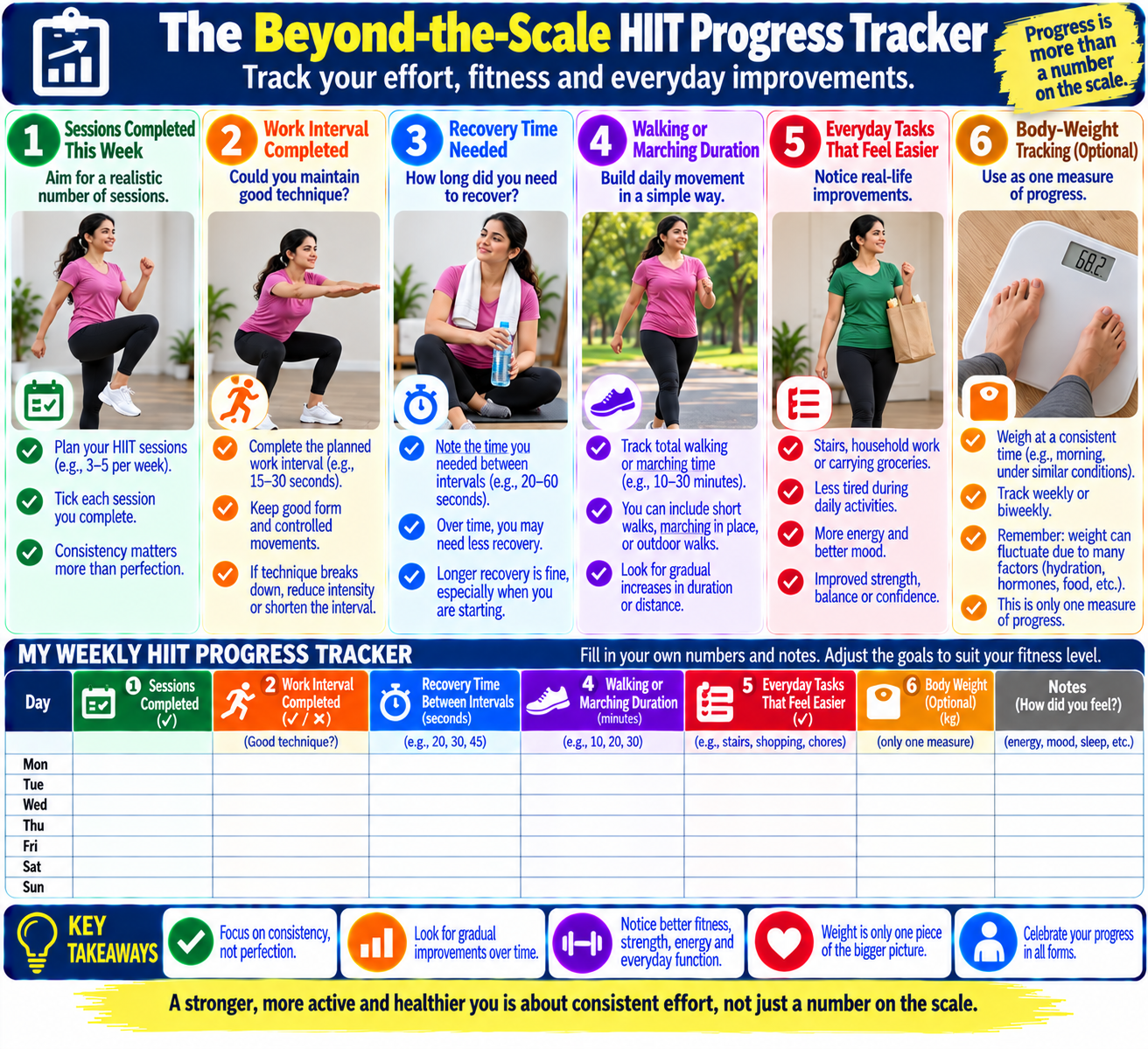
A practical tracking method can make improvement easier to recognize without turning exercise into a daily test of performance.
| What to track | Example | Why it helps |
|---|---|---|
| Activity duration | Total minutes completed | Shows whether you are building consistency |
| Exercise control | Smooth, controlled chair sit-to-stands | Helps monitor movement quality |
| Recovery | How you feel later that day | Can highlight whether the workload is manageable |
| Daily function | Stairs or household tasks feel easier. | Connects training to everyday life |
| Weekly consistency | Number of planned sessions completed | Shows whether the schedule fits your life |
| Body weight, if useful | Occasional measurements under similar conditions | Adds context but does not define success |
Record your progress weekly rather than judging yourself after every workout. If your energy is low one day, a shorter session or rest may be the sensible choice.
The purpose of tracking is to help you adjust your routine, not to pressure yourself into doing more when your body needs recovery.
Frequently Asked Questions
1. Is a low-impact HIIT workout suitable for complete beginners?
It may be suitable for some beginners when the exercises, intensity, and recovery periods are adjusted to their current abilities. However, a person who has been inactive for a long time may benefit from starting with comfortable walking or other moderate activity before trying vigorous intervals.
2. Can I do a no-jump HIIT workout at home without equipment?
Yes. Marching in place, side steps, standing knee lifts, chair sit-to-stands, and wall push-ups can be performed with little or no equipment. Use a stable chair and clear the surrounding area before beginning.
3. How long should a beginner HIIT workout last?
Start with a short session that includes a warm-up, a small number of intervals, and a cooldown. Ten to fifteen minutes may be a useful overall target for some beginners, but you can start shorter if needed. The appropriate duration depends on your fitness and how well you tolerate the exercise.
4. How many days per week should I do HIIT?
One or two short sessions per week may be a reasonable starting point for a previously inactive person, provided vigorous exercise is appropriate. Add other comfortable activities on different days and allow enough recovery between demanding sessions.
5. Does low-impact HIIT burn belly fat?
No exercise can guarantee fat loss from one specific area of the body. Low-impact HIIT may contribute to overall energy expenditure and fitness, but changes in body fat depend on multiple factors, including nutrition and total activity.
6. Is it normal to feel tired after a workout?
Some tiredness can occur after exercise, especially when you are new to it. However, extreme exhaustion, dizziness, chest pain, faintness, or unusual breathlessness should not be treated as proof that a workout was effective. Stop and seek appropriate medical advice when symptoms are concerning.
7. Should I exercise every day to get faster results?
No. More exercise is not always better, especially when you are starting out. Alternate demanding sessions with recovery or easier activities, and increase your workload only when you can tolerate your current routine.
8. Can I replace walking with HIIT?
HIIT can contribute to your weekly aerobic activity, but you do not need to replace walking. Walking is accessible for many people and can help build a foundation of regular movement. A balanced routine may include both, depending on your needs and preferences.
Conclusion
A low-impact HIIT workout for beginners at home can provide a practical way to start structured exercise without repeated jumps or expensive equipment. The most useful routine is one that matches your current ability, gives you enough recovery, and allows you to progress gradually.
Start with marching, side steps, standing knee lifts, chair sit-to-stands, and wall push-ups. Use short work intervals, take generous breaks, and focus on controlled technique rather than speed.
Research supports HIIT as one option for improving cardiovascular fitness, but it does not guarantee rapid weight loss or better outcomes for every person. Walking, strength training, balanced nutrition, sleep, and recovery remain important parts of a sustainable fitness routine.
You do not need to complete a perfect workout today. Start with a manageable amount of movement, pay attention to how you feel, and build from there.
Author Note
Author: RVLNSV PRASAD
This article is intended to help beginners understand low-impact interval training and make informed choices about home exercise. Research references are provided so readers can explore the evidence behind the recommendations. Any personal experience should be included only when it accurately reflects the author’s genuine experience.
Medical Disclaimer
This article is for general educational purposes and does not provide individual medical advice, diagnosis, or treatment. Exercise suitability varies according to health status, medications, age, and physical ability. Consult a qualified healthcare professional if you have a chronic condition, have been inactive for a long time, or are uncertain about beginning vigorous exercise.
Fitness Disclaimer
Exercise carries some risk, even when movements are low impact. Use a clear workout area, choose movements appropriate for your ability, and stop if you experience concerning symptoms. This routine is a general example, not a personalized training prescription. A qualified exercise professional or physiotherapist can help you modify movements when necessary.
Sources
- Centers for Disease Control and Prevention — Adding Physical Activity as an Adult
- Poon and colleagues — High-intensity interval training and cardiorespiratory fitness in adults: An umbrella review of systematic reviews and meta-analyses, 2024
- Cochrane—HIIT and cardiometabolic health in healthy sedentary adults, evidence updated October 2025
- Home-based high-intensity interval training improves cardiorespiratory fitness: A systematic review and meta-analysis
- NHS — Physical activity guidelines for adults aged 19 to 64
- American Heart Association — Exercise and Physical Activity
- Centers for Disease Control and Prevention — What Counts as Physical Activity for Adults
Similar posts
- Active living
- Train Smarter, Not Harder: Optimizing Workouts for Maximum Results
- HIIT vs. LISS: Choosing the Right Workout for Greatest Fat Burn
- 15 Pilates Exercises for Beginners: A Gentle Start to Core Strength and Flexibility
- 7 Effective Cardio Exercises for Weight Loss: The Ultimate Guide
- 10 Best Core Exercises for Beginners at Home: Build a Stronger Core Without Equipment










[…] HIIT Workouts for Beginners: How to Start and See Results Fast […]
[…] HIIT Workouts for Beginners: How to Start and See Results Fast […]
[…] HIIT Workouts for Beginners: How to Start and See Results Fast […]
[…] HIIT Workouts for Beginners: How to Start and See Results Fast […]